
Home/Tree Lighting & Moonlighting
Tree Lighting and Moonlighting
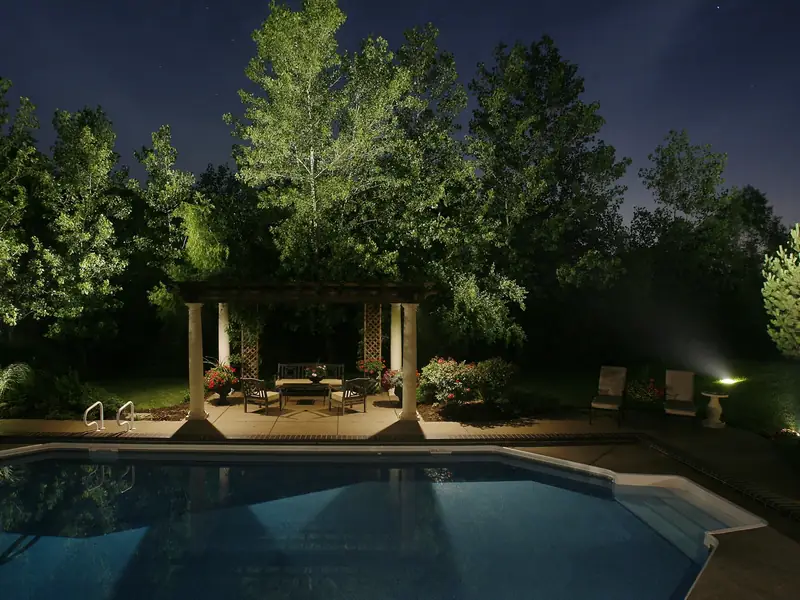
Fixtures set high in a canopy and aimed down do something no ground-level light can: they put the shadow of the branches on the lawn. It looks like a full moon through the trees, which is exactly where the name comes from.
Why the light comes from above
Uplighting a tree is the obvious move and it has its place. It shows the trunk, the structure of the limbs and the underside of the canopy, and on a specimen tree with real character that is worth doing.
But uplighting only ever lights the tree. The ground around it stays dark, and the tree sits in the landscape like a lit object on a black table.
Moonlighting inverts it. A fixture goes thirty or forty feet up, clamped to a limb and aimed back down through the canopy. The leaves and branches break the beam into a pattern, and what lands on the grass, the drive or the patio is dappled shadow. The tree is lit from within, the ground beneath it is usable, and there is no visible source anywhere in your sight line.
On most properties we do both, from different trees, for different reasons.
Getting a fixture forty feet up
This is climbing work, and it is the reason a lot of companies quietly leave moonlighting off their proposals.
The fixture is mounted to a limb capable of carrying it, positioned so the beam clears the trunk and reads across the area below. Cable runs up the trunk on the side away from the main view and is secured so it does not girdle the tree as it grows. On a mature oak or sycamore the cable becomes genuinely difficult to find within a season.
Fixture selection matters more here than almost anywhere else on a property, because you are not going back up for a lamp change casually. A properly sealed, professional-grade housing is the only thing worth putting in a tree.
Trees are not buildings
A wall stays where you left it. A tree grows, leans, drops limbs and puts on canopy.
A fixture that was perfectly aimed four years ago may now be pointing at the inside of a branch that was not there. Mounting hardware has to allow for the trunk thickening, which is why this work is attached rather than fastened through, and why the mounts get checked on every maintenance visit.
This is the single clearest argument for a maintenance plan. Canopy lighting drifts on a schedule that nothing else on the property does, and it drifts invisibly: the system still switches on, it simply stops doing what it was designed to do.
Drives, and how not to build a runway
A long approach lined with evenly spaced path lights reads as an airstrip. It is symmetrical, repetitive and it tells you nothing about where you are.
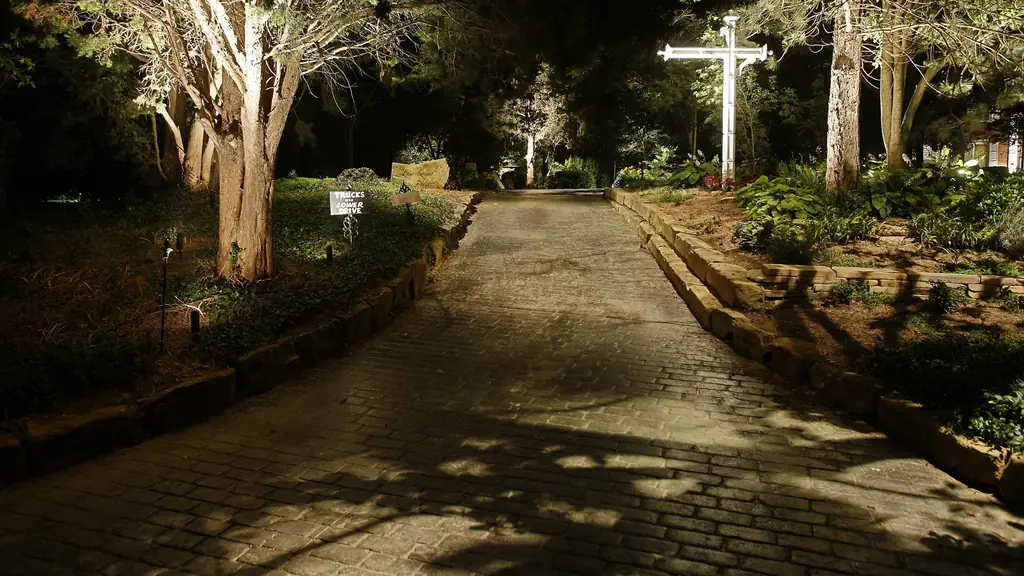
Lighting a drive from the canopy above instead gives you pools of dappled light with dark between them, which is both more comfortable to drive and considerably more like how a drive under trees actually looks by moonlight. Where there is no canopy, we alternate and stagger rather than march fixtures down both sides.
Which trees are worth lighting
Specimen hardwoods with open structure are the best candidates: oak, maple, sycamore, tulip poplar. Crepe myrtles and ornamental cherries are usually better uplit, because the interest is in the trunk form and the flower.
Dense evergreens rarely repay canopy work at all. A blue spruce lit from below is striking. The same tree lit from above produces one dark cone and a fixture nobody can reach.
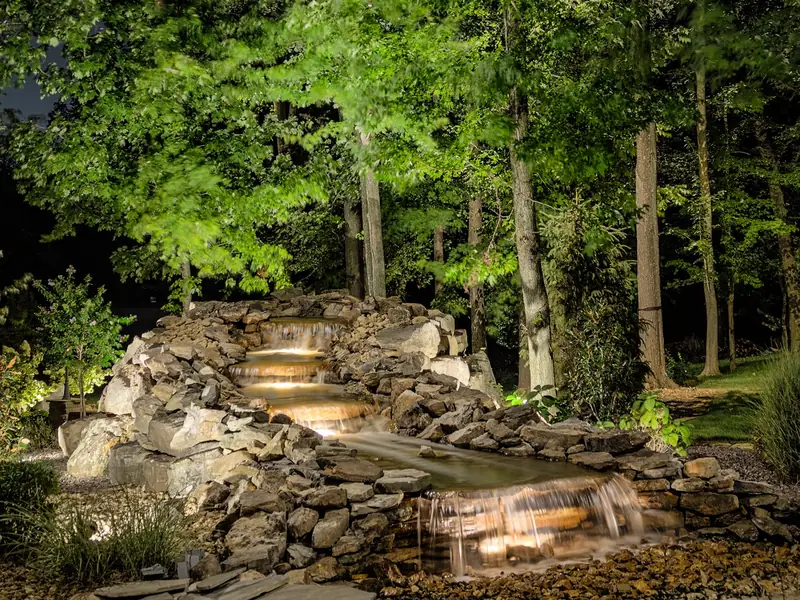
Canopy work
- Typical height
- 25 to 40 ft
- Housings
- Professional grade
- Mounting
- Allows for growth
- Best species
- Open hardwoods
- Re-aim interval
- Every visit
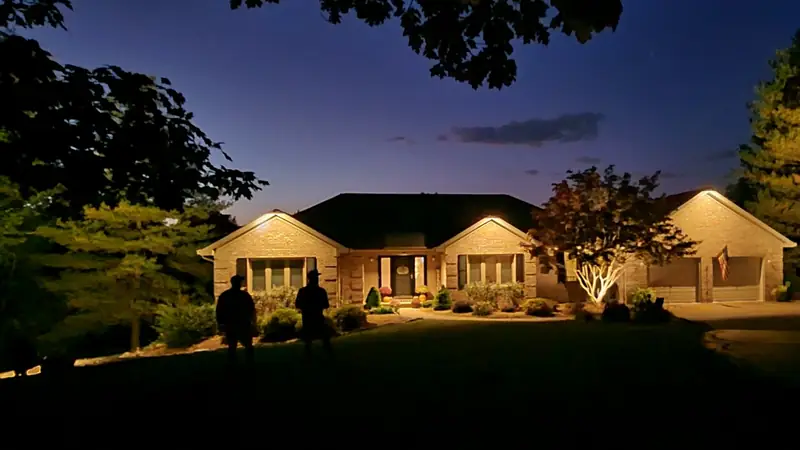
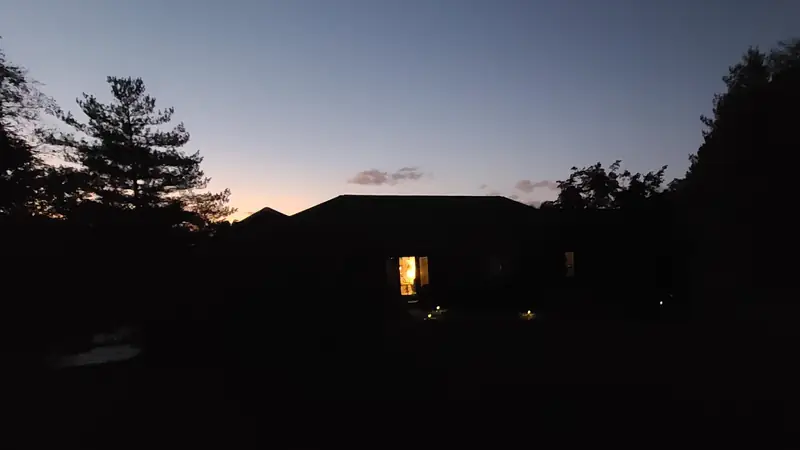
A tree lit from below, for comparison.
Moonlighting comes down from the canopy. This house takes the other approach: one tree uplit through its trunk, with the gables washed from above. Drag the line to compare.
Questions about lighting trees
Not when the hardware allows for growth.
The damage people have seen comes from cable or strapping wrapped tight around a limb and then left for a decade, which girdles it. Our mounts and cable runs are set so the tree can thicken, and they are checked on every service visit.
Storms take trees in this region, and it happens to lit ones too.
The fixture usually survives. We recover it, cap the run safely and, if there is another suitable tree covering that part of the property, relocate it. The original drawing shows what that fixture was lighting, which makes the decision much easier.
Yes, and it is one of the most comfortable ways to do it.
Light arriving from above at low intensity is much closer to how we are used to seeing outdoors than light thrown sideways across a table. Where you need to see properly, to read a menu or handle a grill, that gets its own small fixture rather than brightening everything.
Realistically, once or twice a year on a growing tree.
That is normal work on a maintenance plan rather than a separate call-out. A fixture that has drifted does not announce itself, which is exactly why a scheduled visit is worth more here than anywhere else on a property.
Let's look at your property after dark
A designer comes out, walks the property with you and gives budget numbers by area. That visit carries no charge. If you want the drawing, we quote a design fee from there.
NiteLiters Inc. · 729 Cumberland St, Owensboro, KY 42303
Monday to Friday, 8:00am to 5:00pm